

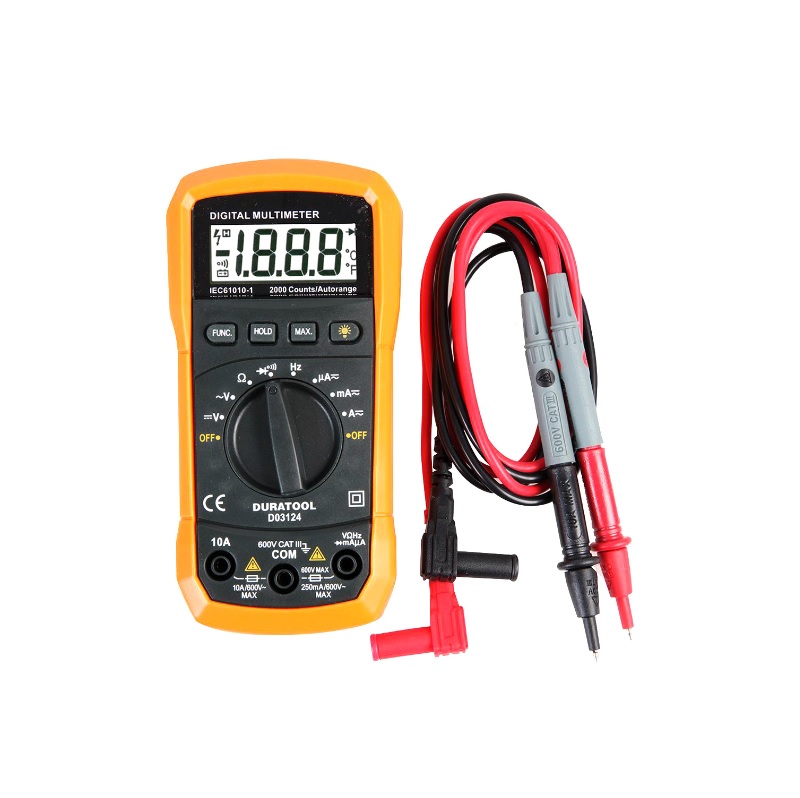
Introduction:
A multimeter is an essential tool for anyone working with electronics. It measures voltage, current, and resistance, helping you troubleshoot circuits and ensure components function correctly.
Types of Multimeters:
Analog Multimeters:
Uses a needle to display readings.
Generally less expensive but can be harder to read accurately.
Digital Multimeters:
Displays readings on an LCD screen.
More precise and easier to use, especially for beginners.
Basic Functions:
Measuring Voltage:
Set the multimeter to the appropriate voltage range.
Place the probes on the circuit’s positive and negative terminals.
Read the voltage on the display.
Measuring Current:
Switch the multimeter to the current measurement mode.
Connect the probes in series with the circuit.
Ensure the current doesn’t exceed the multimeter’s limit to avoid damage.
Measuring Resistance:
Set the multimeter to the resistance (ohms) setting.
Place the probes across the component or section of the circuit.
Read the resistance value on the display.
Safety Tips:
Always start with the highest range setting to prevent damage.
Never measure current in parallel with a component.
Use caution when working with high voltages.
Conclusion:
Understanding how to use a multimeter is crucial for anyone involved in electronics. Practice with basic measurements and always follow safety guidelines to make the most of this versatile tool.